Moss on Your Roof in the Pacific Northwest: What It Does and What to Do
A green roof is so common in western Washington that most people stop noticing it. Here is why it is worth a closer look.
October 13, 2026 · 4 min read
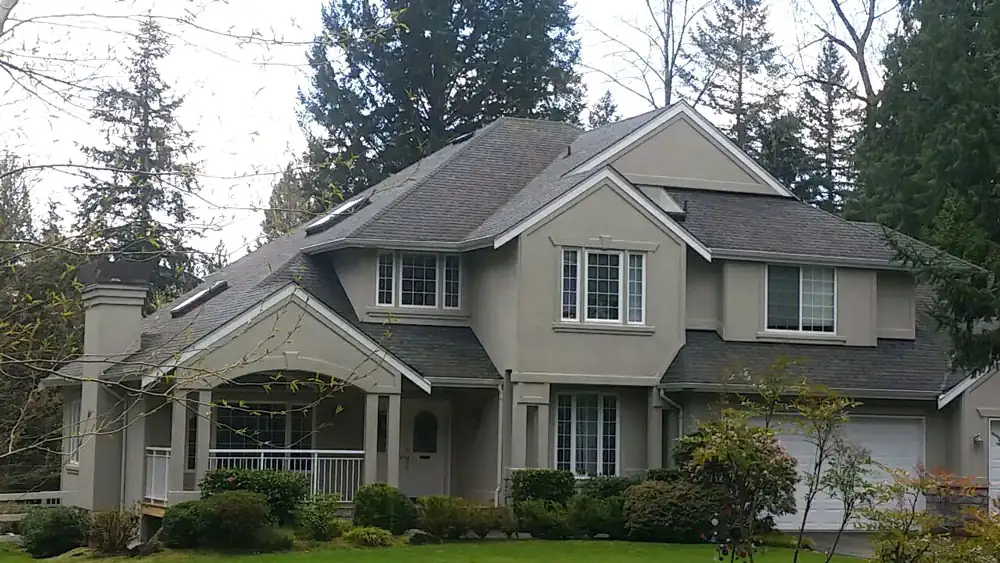
You notice it in February, usually on the north side of the house where the evergreens never let the sun in. A soft green coat on the shingles, thicker along the edges and down in the valleys. In the Pacific Northwest, moss on a roof is so common that plenty of homeowners stop seeing it. It is worth a closer look before it turns into a bigger job.
What moss actually does to a roof
Moss is not just a cosmetic problem. It works like a sponge, holding water against the shingle surface long after the rain has stopped. Shingles that stay wet through a long Puget Sound winter wear faster than shingles that get a chance to dry out between storms.
As moss grows, it works its way under the edges and tabs of the shingles. Over time it can lift them slightly, which gives wind and rain an easier path underneath. Clumps also break loose and wash into the gutters, where they hold other debris and slow the drainage. A gutter that does not drain sends water back toward the fascia and the roof edge, which is the last place you want it sitting.
None of this happens overnight. A light covering on a sound roof is a maintenance item, not an emergency. Heavy moss on an older roof is a different story, and it usually shows up alongside other signs of age.
Why it grows where it does
Moss wants shade, moisture and something to hold on to. North-facing slopes, roofs sitting under tall firs and cedars, and the spots where needles and leaves collect are the usual targets. Valleys and the lower courses near the eaves stay damp longest. If one slope of your roof is green and the other is clean, that pattern is telling you something about light and airflow, and trimming back a branch may help as much as any treatment.
Wind storms add to the picture. Branches that rub the roof or drop twigs and needles feed the same damp spots, so tree trimming and moss are often the same conversation. A clean roof under a heavy canopy tends to turn green again unless the shade or the debris changes.
What to do about it
Start gentle. Pacific Pride's own truck wrap lists Gentle Moss Removal and Gutter Cover & Cleaning, with a question printed in large letters: “Got Moss?” The two services sit side by side for a reason. The debris has to go somewhere, and clean gutters are part of keeping a roof dry.
A few plain cautions from the trade apply no matter who does the work. High pressure water can strip the protective granules off shingles and push water up underneath them. A wet, mossy roof is slick, and a fall from a ladder or a roof edge is far worse than a green roof. Scraping hard with metal tools can tear the shingle surface. The goal of any treatment is to take the moss off without damaging what is underneath.
A roofer who looks at the roof before treating it can also tell you whether the shingles are worth treating at all. If the surface is already breaking down, moss removal will not bring the life back, and the honest answer may be a repair or a replacement estimate instead.
- Trim branches that shade the roof or drop debris onto it.
- Keep gutters and downspouts flowing so water leaves the roof edge quickly.
- Check the north side and the valleys each spring and fall, from the ground or with binoculars.
- Skip the pressure washer. Gentle methods protect the shingles.
- Have a roofer look at heavy growth before it lifts the shingle edges.
When moss is a sign of something bigger
Sometimes the moss is a symptom. A roof that holds water in low spots, shingles that have lost their granules, or flashing that no longer sheds water will all grow moss faster. Treating the green and ignoring the cause just brings it back the following winter.
Those are the questions Pacific Pride's evaluations are built to answer. Their approach is to identify both the visible issues and the underlying problems before making any recommendations, and to be honest about what is easiest versus what is right. If the roof is sound, you will hear that. If it is not, you will hear that too, and you will hear why.
Where to start
If you are not sure how much trouble the moss is causing, the free roof estimate is the lower-key way to begin. They measure the roof, email you a digital estimate with a price range, and answer your questions before anyone climbs a ladder. For a fuller picture, the $349 Roof Report is an on-site visit with a review of leaks and problem areas, a repair versus replacement evaluation, and clear written recommendations.
Call (425) 252-0444 and tell them how much of your roof has gone green. They will tell you what they would do about it.
Pacific Pride Roofing, (425) 252-0444
Call (425) 252-0444More articles
Repair or Replace? How a Roofer Decides on a Puget Sound Roof
A ceiling stain after the first October rain does not automatically mean a new roof, and it does not automatically mean a patch either.
What Happens During a Free Roof Estimate With Pacific Pride
Most people brace for a sales pitch. This is the process Pacific Pride follows, step by step, so you know what to expect.